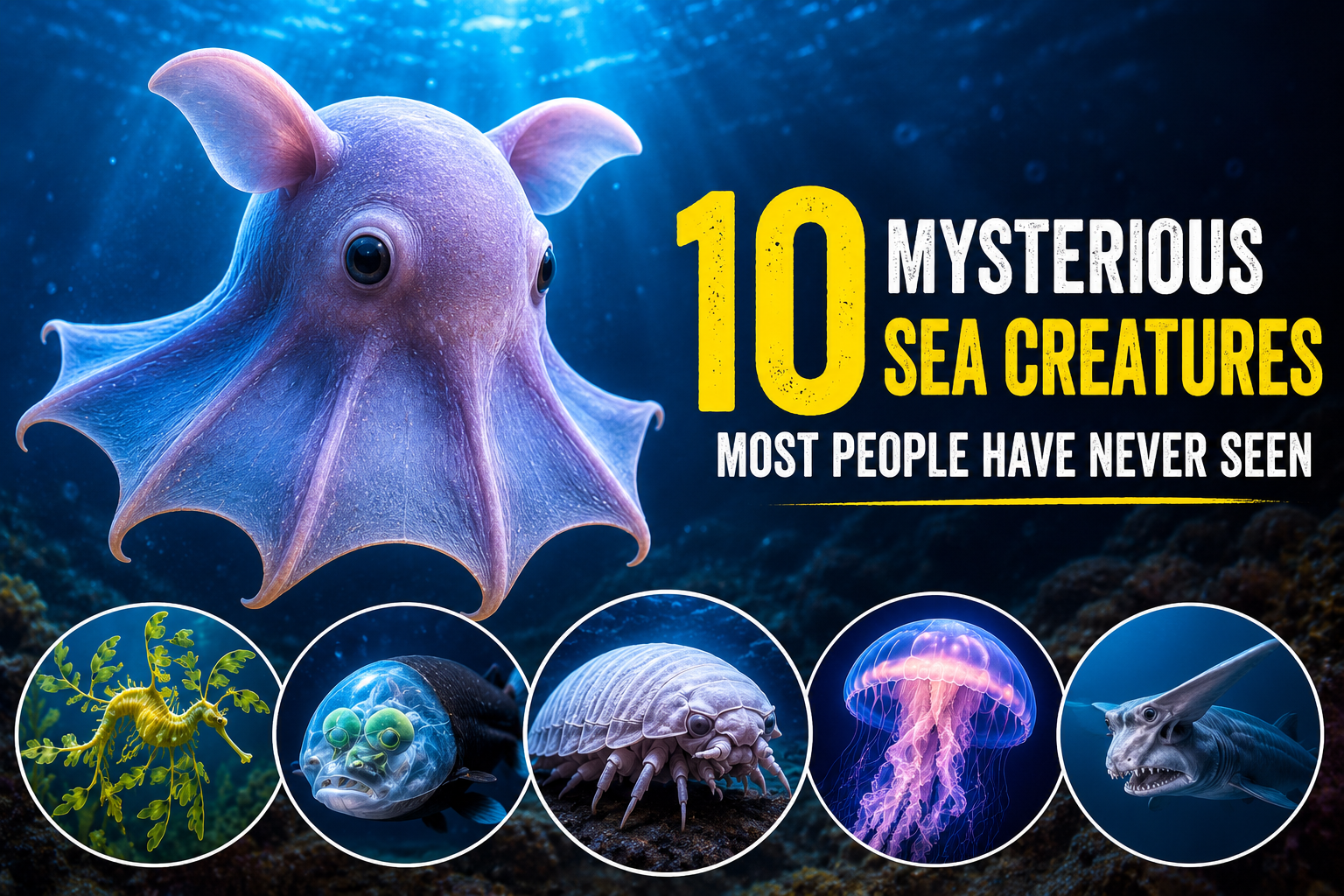
The ocean covers more than 70% of our planet, yet much of its deepest environment remains difficult for humans to explore. Far below the surface, where sunlight fades and pressure increases, some truly extraordinary creatures have adapted to survive.
Some have transparent heads. Others produce their own light, disguise themselves as plants, or look like creatures from another world.
While scientists continue to study marine life and discover more about deep-sea ecosystems, these fascinating animals remind us just how mysterious our oceans can be.
Here are 10 mysterious sea creatures most people will probably never see in the wild.
1. Dumbo Octopus
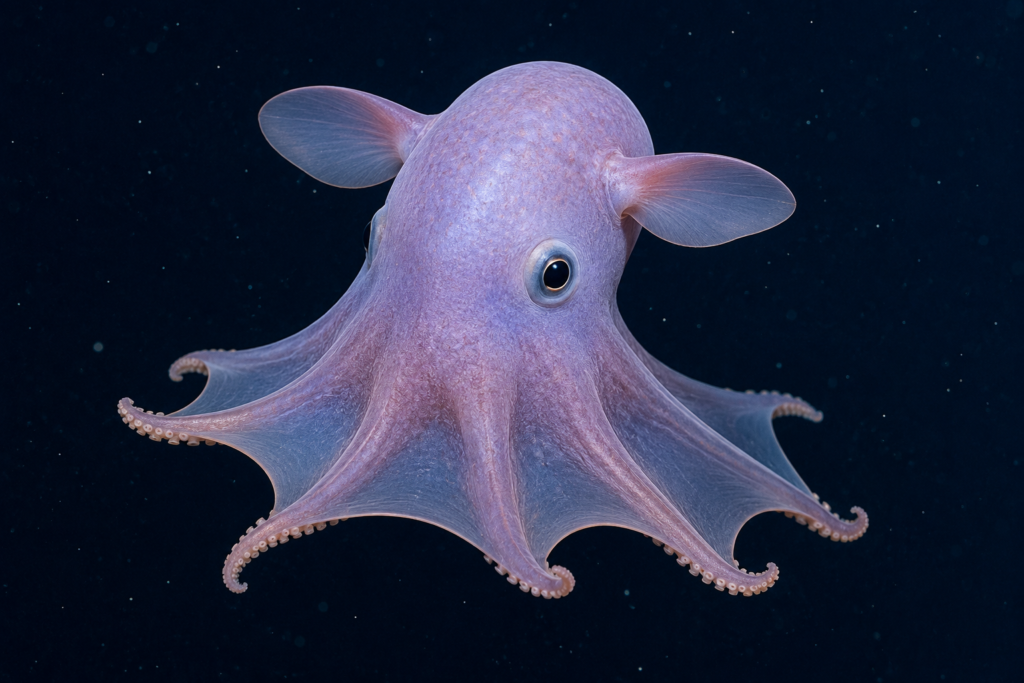
With two large fins that resemble the ears of Disney’s famous elephant, the Dumbo octopus is one of the most charming creatures of the deep sea.
These octopuses belong to the genus Grimpoteuthis and live at great depths, far below the ocean’s surface. Instead of moving primarily by jet propulsion like many other octopuses, they can gently flap their ear-like fins to move through the water.
Their remote habitat means very few people will ever encounter one outside deep-sea footage.
2. Goblin Shark
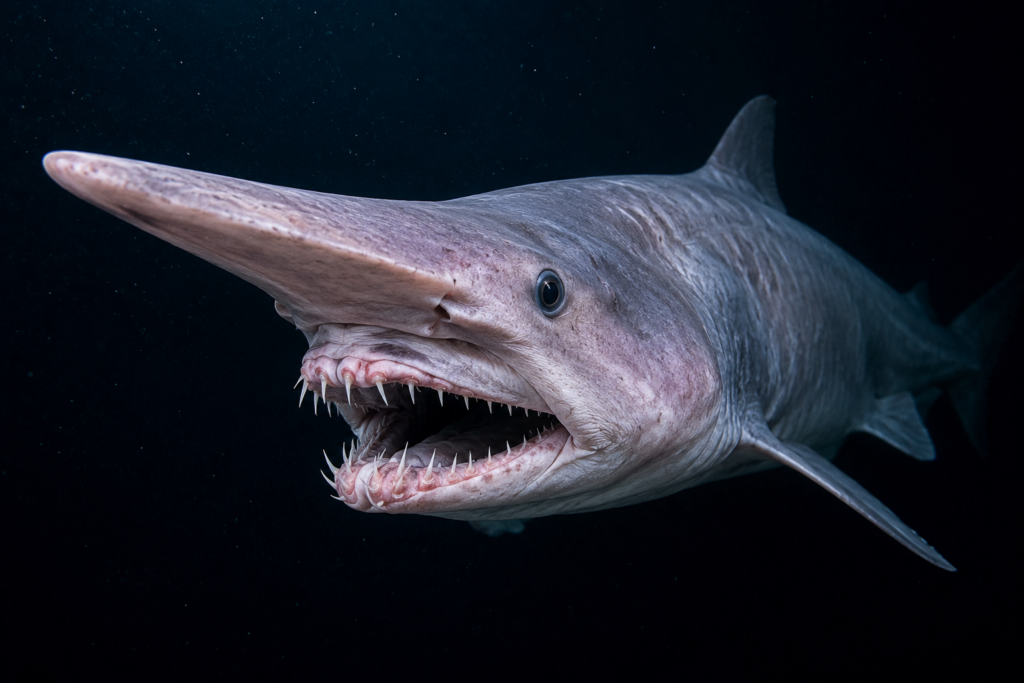
The Goblin shark has an appearance that is difficult to forget.
Known for its long, flattened snout and unusual jaws, this deep-water shark looks remarkably different from the sharks most people recognize.
Its jaws can rapidly extend forward when capturing prey, giving it one of the most unusual feeding mechanisms in the ocean.
Because Goblin sharks generally live in deep water, encounters with humans are uncommon.
3. Barreleye Fish
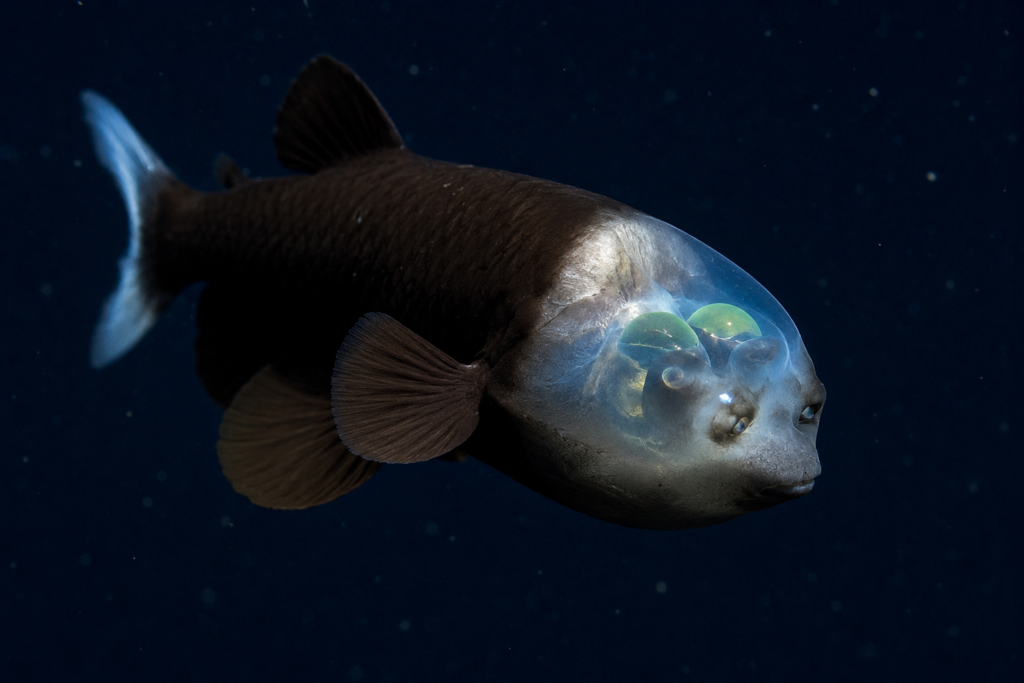
Imagine being able to look through the top of your own head.
That’s essentially what makes the Barreleye fish so fascinating.
This small deep-sea fish has a transparent, dome-like head containing highly specialized tubular eyes. Scientists believe these eyes help it detect prey in the dim environment of the deep ocean.
Its unusual appearance makes the Barreleye look like something created for a science-fiction movie rather than a real animal.
Yet it is very much real.
4. Giant Isopod
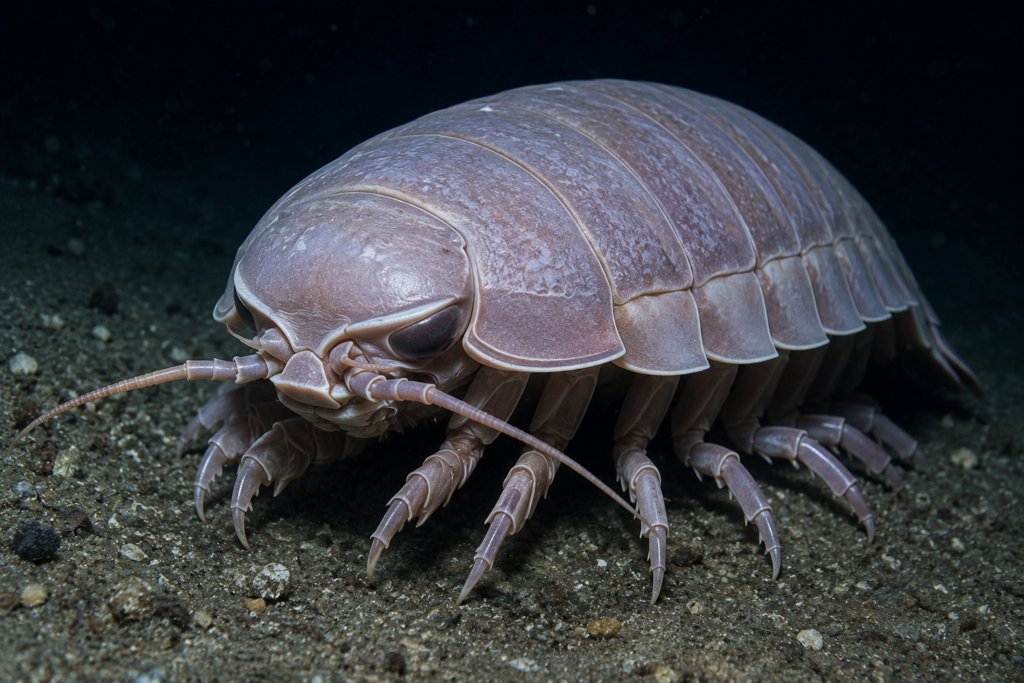
If you’ve ever seen a small pill bug in a garden, imagine a much larger relative living at the bottom of the ocean.
That’s the Giant isopod.
These deep-sea crustaceans have armored, segmented bodies and can grow surprisingly large compared with their land-dwelling relatives.
They live in cold, deep waters and are adapted to an environment where food can sometimes be scarce.
Their prehistoric appearance makes them one of the ocean’s most recognizable unusual creatures.
5. Vampire Squid
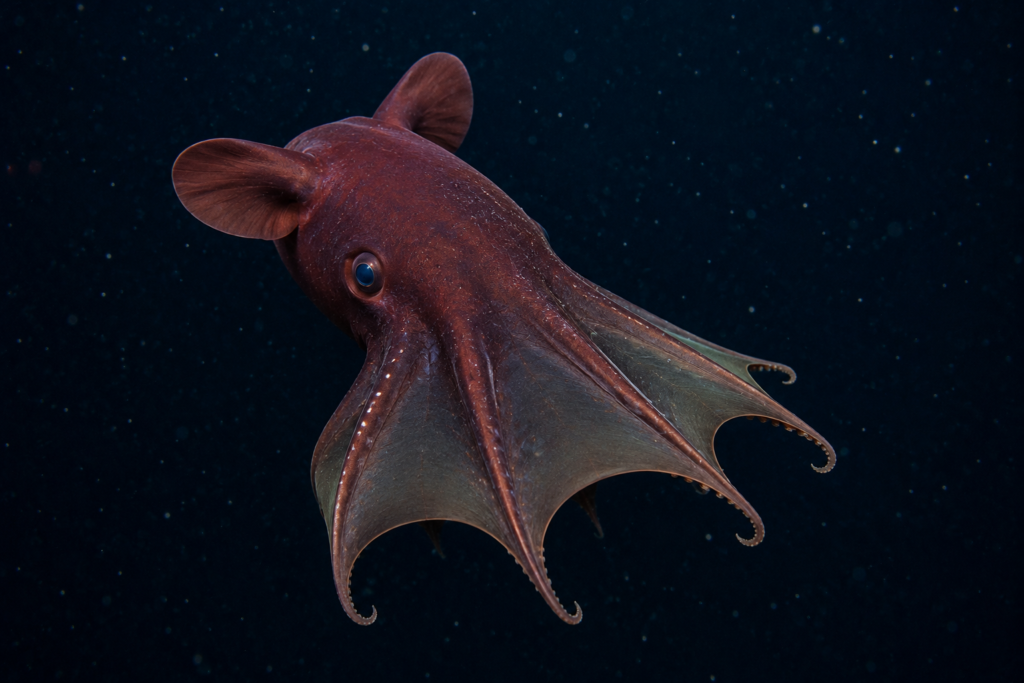
Despite its dramatic name, the Vampire squid is not the terrifying predator you might imagine.
Its dark coloration and webbing between its arms inspired its unusual name. It lives in deep, low-oxygen areas of the ocean and has developed remarkable adaptations for surviving there.
When threatened, it can display defensive behaviors that make it appear larger and more intimidating.
Its mysterious appearance perfectly matches the strange world it calls home.
6. Leafy Seadragon
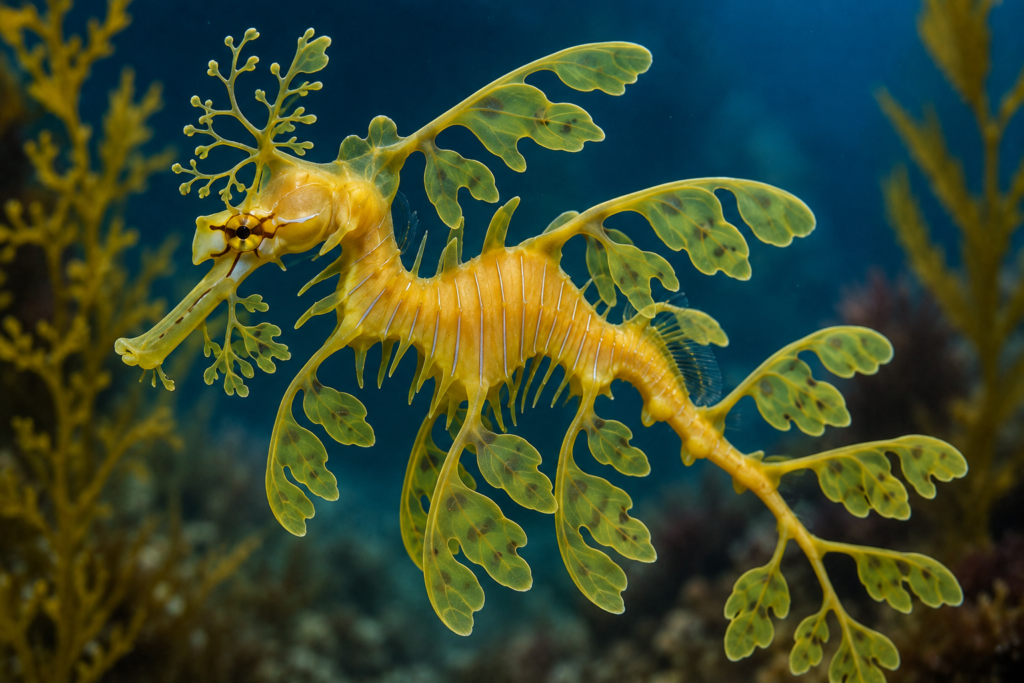
The Leafy seadragon might be one of nature’s greatest masters of disguise.
Related to seahorses, this beautiful marine animal has elaborate leaf-like appendages covering its body.
These features help it blend into seaweed and underwater vegetation, making it difficult for both predators and humans to notice.
Found in waters off southern and western Australia, the Leafy seadragon is a spectacular example of natural camouflage.
At first glance, you might mistake it for a floating piece of seaweed.
7. Deep-Sea Anglerfish
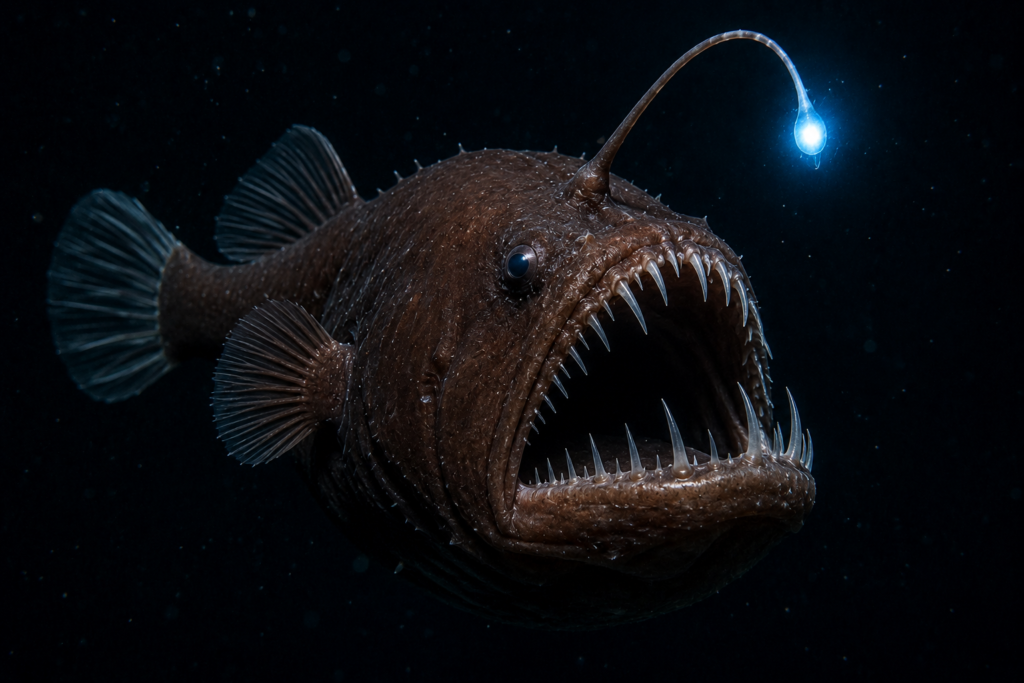
The deep-sea Anglerfish is famous for one remarkable feature: its glowing lure.
In the darkness of the deep ocean, certain anglerfish species use bioluminescence—a natural ability to produce light—to help attract prey.
The glowing lure extends near the fish’s mouth, creating an unusual hunting advantage in an environment where sunlight cannot reach.
Its distinctive appearance has made the Anglerfish an icon of mysterious deep-sea life.
8. Frilled Shark
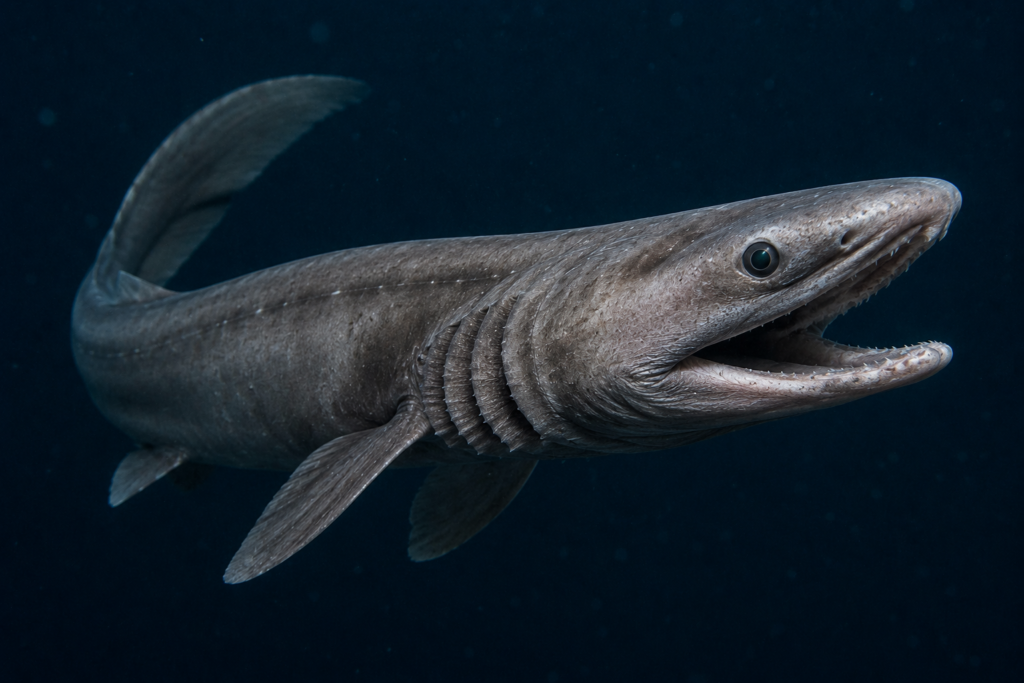
The Frilled shark is another unusual inhabitant of deep waters.
Its long, eel-like body looks very different from the streamlined shape people typically associate with sharks. Its name comes from the frilled appearance of its gill slits.
Because it usually lives at significant depths, observations of living Frilled sharks are relatively uncommon.
Its unusual body shape and ancient lineage have fascinated scientists and ocean enthusiasts for years.
9. Giant Siphonophore
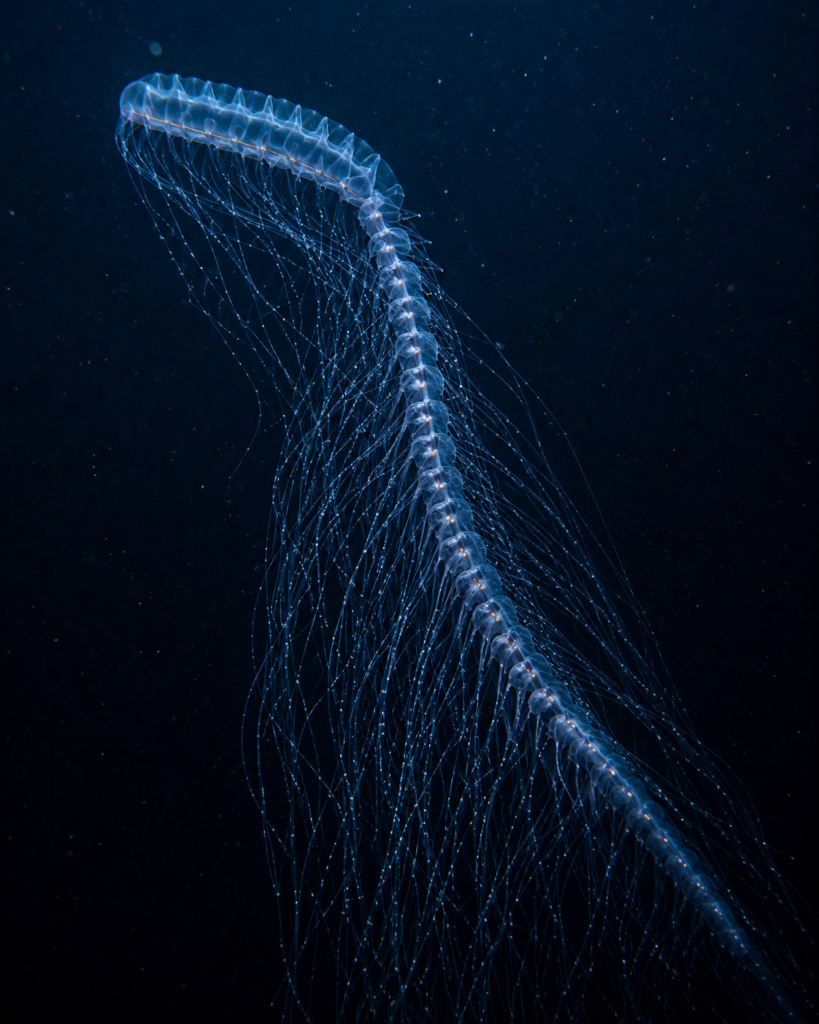
At first glance, a Giant siphonophore might look like one enormous animal.
But there’s a fascinating surprise.
Siphonophores are actually colonies made up of many specialized individual organisms called zooids that work together as one functioning unit.
Some deep-sea siphonophores can reach extraordinary lengths, creating an almost otherworldly sight as they drift through dark ocean waters.
They are among the best examples of how unusual marine life can become.
10. Japanese Spider Crab
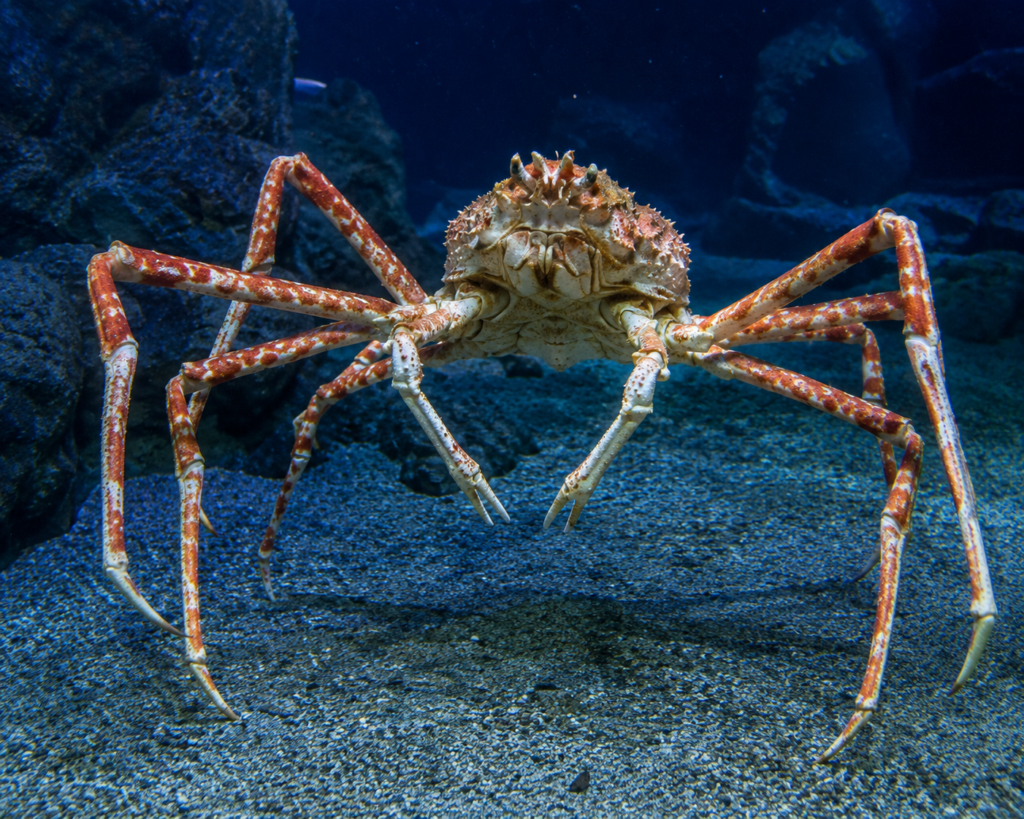
With extremely long legs and a striking appearance, the Japanese spider crab is one of the most impressive crustaceans in the ocean.
Found in waters around Japan, these crabs are famous for their enormous leg span.
Despite their intimidating size, their appearance is perhaps more surprising than frightening.
Seeing one walking across the seafloor can feel like watching a giant spider moving underwater.
Why the Deep Ocean Remains So Mysterious
Exploring the deep ocean is incredibly challenging.
Extreme pressure, darkness, cold temperatures, and the enormous size of the marine environment make research difficult and expensive. Scientists often rely on remotely operated vehicles, specialized submersibles, and advanced underwater cameras to observe deep-sea life.
As technology improves, researchers continue to learn more about these remarkable ecosystems.
And there may still be countless marine species waiting to be documented.
Final Thoughts
From the transparent-headed Barreleye fish to the enormous Japanese spider crab, the ocean is home to creatures unlike anything most of us encounter on land.
Each species has evolved remarkable adaptations to survive in its unique environment.
The most fascinating part?
These ten creatures represent only a tiny glimpse of the incredible diversity hidden beneath the waves.
The next time you look across the ocean, remember that far below the surface lies an extraordinary world—one that scientists are still working to understand.